When to Visit the Tulum Ruins
Short answer. Eight in the morning, and November if you can choose the month. The site is unshaded, the ticket windows shut at about 3:15 pm, and the difference between an eight o'clock arrival and an eleven o'clock one is larger than the difference between any two months.
What is the best hour of the day?
Eight, when the gates open. Three things happen at once: the limestone has not yet absorbed the day's heat, the low sun still reaches into the Temple of the Frescoes where the surviving paint is, and the coaches from Cancun and Playa del Carmen have not arrived. By eleven all three have reversed.
Why does 8:00 beat 11:00 so decisively?
Because there is nowhere to escape to. At a site with shade, a hot hour is an inconvenience. Here the walled area is open limestone and the few trees are not where you need them, so heat is not a background condition, it is the whole experience. Add a coach party arriving at the same moment and the same ninety minutes becomes a different visit.
What about the 3:30 cut-off?
Last entry is 3:30 pm, but the ticket windows begin closing before it and are usually shut by about 3:15 pm. The afternoon window after the day trips leave is genuinely good — quieter, softer light — but you are racing a closing time. Be buying by half past two.
Which months are the dry season?
November to April. You get highs of 27–31 °C, low humidity, reliable sun and clear water. You also get the busiest half of the year, and prices follow the crowds.
What does hurricane season actually mean here?
June to November, peaking September and October. In practice most days are unaffected and rain means a heavy afternoon downpour rather than a wet day. What the season really means is a small chance of a closure at short notice, which is what free cancellation is for — and every departure we list refunds in full up to 24 hours ahead.
What does sargassum do to a visit?
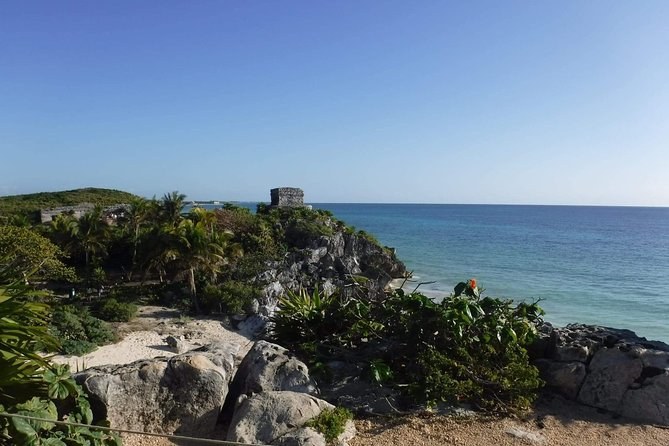
Nothing, to the ruins. The brown seaweed that lands on this coast from roughly April to August affects beaches. The archaeological zone sits twelve metres up on limestone and the view from the cliff is unchanged. The one thing it decides is whether the cove below is somewhere you want to go down to.
Is there anything at the equinox?
Not in the way there is at Chichén Itzá, where the light effect on the pyramid draws a scheduled crowd. Tulum has no ticketed equinox programme. The coast is busier around the date and the site is worth seeing at sunrise any day of the year, which is a better plan than travelling for one.
When is it busiest?
Christmas to New Year, Easter week, and the whole of December to March. Within any day, you want to avoid ten in the morning to two in the afternoon. Sunday is the busiest day of the week, because entry is free for Mexican citizens and residents — so if you have a choice of day, take any other one.
When is it quietest?
September and October, by a distance. If the weather holds you will have the place close to yourself, and what you are trading for that is a real chance of a storm. Book something refundable and you get the best value of the year.
Tulum month by month
January
Peak dry season and peak crowds. Daytime highs around 28 °C with low humidity, and the water is clear. Coach parties from Cancun arrive from about 10 am. Book the earliest departure you can find.
February
The most reliable month of the year for weather: dry, around 28 °C, and breezy enough on the cliff to be comfortable. It is also busy. Nortes — cold fronts blowing down from the north — can bring a grey, windy day at short notice.
March
Hot, dry and very busy, with spring-break traffic through the Riviera Maya. Highs climb past 30 °C. The equinox draws a crowd to the coast, though Tulum has no ticketed equinox programme of the kind Chichen Itza runs.
April
The last comfortable dry month. Highs of 31 °C and rising humidity. Sargassum — the brown seaweed that lands on this coast — usually begins to arrive, which affects the cove below the ruins rather than the ruins themselves.
May
Hot: 33 °C and humid, with the first rains at the end of the month. Sargassum is often at its worst. Crowds thin noticeably after Easter, so the site itself is more pleasant even though the weather is not.
June
The rainy season and the official start of hurricane season. Rain here means a heavy afternoon downpour rather than a wet day, and mornings are usually clear. Humidity is high and there is no shade. Go at opening or not at all.
July
Hot, humid and wet in the afternoons, with a mid-summer dry spell some years. Family travel pushes visitor numbers back up. The stone holds heat, and the walk from the car park is the part people underestimate.
August
The hottest and most humid month, and statistically one of the more active for storms. Afternoon rain is close to daily. An 8 am start is not a preference in August, it is the difference between a good visit and a short one.
September
The peak of hurricane season and the quietest month at the site. Closures are possible at short notice when a storm tracks in, which is what free cancellation is actually for. If the weather holds, you will have the place close to yourself.
October
Hurricane season continues into the first half; rain eases through the month. Highs around 30 °C. Sargassum usually clears. Prices and crowds are both at their lowest before the winter season starts.
November
The turn of the season and arguably the best compromise of the year: the rain has largely stopped, the heat has dropped to around 29 °C, and the winter crowds have not arrived. Nortes begin, so a grey windy day is possible.
December
Dry, clear and around 27 °C — the most comfortable temperatures of the year. It is also the start of peak season, and the last two weeks of the month are among the busiest at the site. Book early departures well ahead.
Which month should you actually pick?
| Priority | Month | Why |
|---|---|---|
| Best all-round | November | Rain has stopped, heat has dropped, crowds have not arrived |
| Most reliable weather | February | Driest and clearest, but busy |
| Quietest | September | Lowest numbers of the year; storm risk is real |
| Best value | October | Prices and crowds low, weather improving through the month |
| Avoid if you can | August | Hottest, most humid, daily afternoon rain |
What a norte does, and why nobody warns you
Between November and February, cold fronts push down from the north across the Gulf. Locally they are called nortes, and they arrive with little warning: a grey sky, a hard wind off the sea and temperatures that drop ten degrees in an afternoon. They last a day or two.
For a visit to Tulum a norte is genuinely mixed. The wind on an exposed cliff is cold and photography suffers under flat grey light. But the site empties, the heat problem disappears entirely, and walking the circuit in fifteen degrees with a jacket is a far more comfortable hour than doing it in thirty-three. If one lands during your stay, it is not a day to write off.
Booking around the weather
The practical strategy is the same in every month and it costs nothing. Book the earliest departure available, book something that refunds in full up to 24 hours ahead — which every departure we list does — and check the forecast the evening before. In hurricane season that combination is the whole of your risk management, and it works because the operators absorb the cancellation rather than you.
What does not work is booking a non-refundable transfer for a fixed date in September because it was cheaper.
Sunrise, and whether it is possible
A recurring question, because the city was oriented to the sunrise and the photographs suggest it. The honest answer is that you cannot be inside the archaeological zone at sunrise: the gates open at eight, and in this latitude the sun is well up by then, particularly in summer.
What you can do is be first through the gate, which in the winter months puts you on the cliff while the light is still low and gold across the front of El Castillo. That is the closest available thing and it is genuinely worth the alarm. Anyone selling you sunrise access to the ruins themselves is selling something that does not exist.
What if it rains while you are there?
Go anyway. Ordinary rain does not close the site, the crowd thins, the stone darkens and your photographs improve. What you want to avoid is a storm track, and you will get a day or so of warning — enough for you to use a free cancellation and move the booking.
Frequently asked questions
What is the best time of day to visit the Tulum Ruins?
Eight in the morning, when the gates open. Cooler, emptier, and the light still reaches into the Temple of the Frescoes.
What is the best month to visit the Tulum Ruins?
November is the best compromise: the rain has stopped, the heat has dropped and the winter crowds have not arrived. February has the most reliable weather but is much busier.
Is it worth visiting in hurricane season?
Often, yes — September and October are the quietest months of the year. Book a departure that refunds in full up to 24 hours ahead.
Does sargassum affect the Tulum Ruins?
Not the ruins, which sit twelve metres above the water. It affects the cove below the cliff, roughly April to August.
Read next: the month-by-month detail · hours and the afternoon cut-off. Every departure is compared on Tulum Ruins Tours.
Early departures worth booking

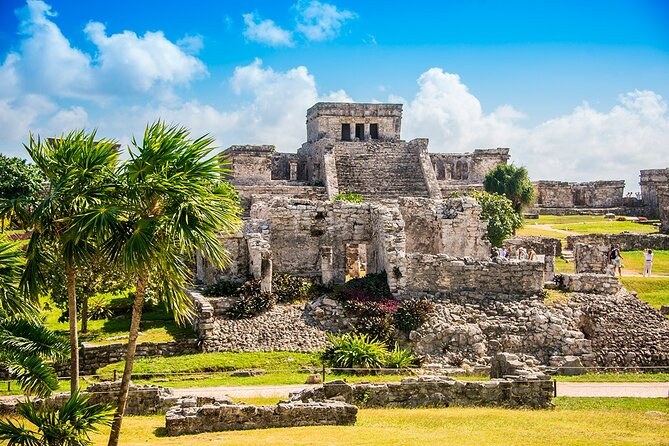
Going early is the whole trick — compare Tulum Ruins tours and pick the earliest start you can find.