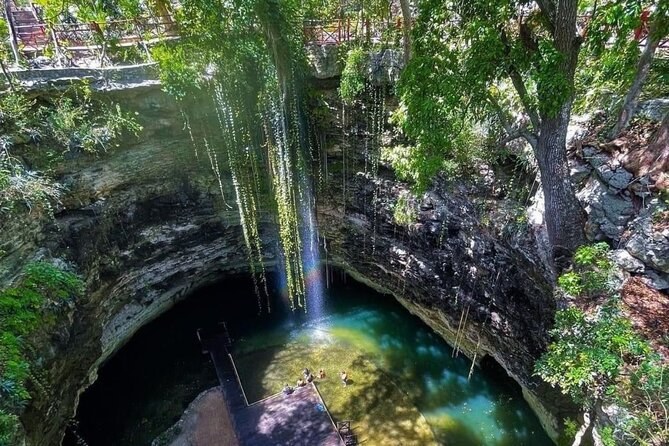
Tulum Ruins, Chichén Itzá or Cóba — Choosing Between the Three
Short answer. Tulum if you are on the coast and have a morning. Chichén Itzá if you have a whole day and want monumental scale. Cóba if you want to climb something. They answer different questions and they are not substitutes.
Which is closest to where you are staying?
This decides more than anything else about the day.
| From | Tulum | Cóba | Chichén Itzá |
|---|---|---|---|
| Tulum town | 15 min | 45 min | 2 h 30 |
| Playa del Carmen | 1 h | 1 h 30 | 2 h 30 |
| Cancun | 2 h | 2 h 15 | 2 h 30 |
| Cozumel | Ferry + 1 h | Ferry + 1 h 30 | Ferry + 2 h 30 |
From anywhere on the Riviera Maya, Tulum is a morning and the other two are days.
Which one can you climb?
Cóba, and only Cóba. Climbing is prohibited at Tulum and at Chichén Itzá, and has been for years at both. If getting to the top of a Maya structure is on your list, that narrows it to one site and it is worth knowing before you book anything.
What does Tulum have that the other two do not?
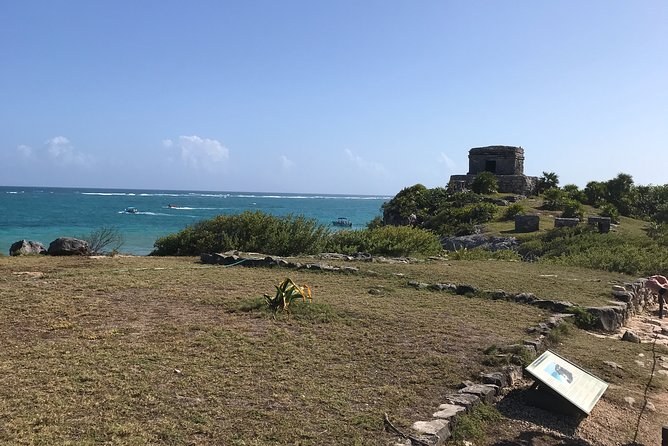
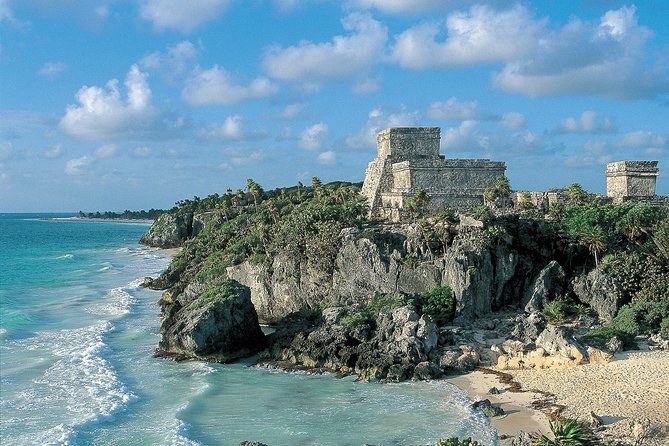
The setting, which is not a small thing — nowhere else did the Maya build on a cliff above that colour of water. And surface detail: painted stucco and relief carving survive here better than at the inland cities, so you can still see a little of what a building looked like in use rather than only its structure.
It is also the site that explains the Maya economy rather than Maya monumental ambition. It was a working port, and it was still occupied when European ships first passed.
What does Chichén Itzá have that Tulum does not?
Scale, and one building with no equal in the region. It is far larger, far more architecturally ambitious, and if you will only ever see one Maya city it is the more complete statement of what they could build. It also has a ball court, an observatory and a cenote of its own, none of which Tulum has.
How long does each one take as a day?
| On site | Door to door | Shape of the day | |
|---|---|---|---|
| Tulum | 90 min – 2 h | 4–8 h | Morning, back for lunch |
| Cóba | 2–3 h | 6–9 h | Half to full day, usually with a cenote |
| Chichén Itzá | 2–3 h | 10–12 h | A full day, most of it committed |
What does each cost at the gate in 2026?
Tulum is the cheapest of the three and the most complicated: roughly MX$515–622 (about US$28–35), across three separate charges. Chichén Itzá carries the highest combined charge, because the state of Yucatán levies a fee on top of the INAH ticket. Cóba sits between them and is the simplest to pay.
All three rose in January 2026 under the same national revision.
Which suits a first Maya site?
Chichén Itzá if you want to be impressed and have the day for it. Tulum if you want to understand something and be back by lunch. There is a real argument for Tulum first even so: it is small enough to absorb, and it gives you a frame for the bigger site afterwards.
Which suits children?
Tulum, comfortably. It is compact, it is outdoors, there are iguanas, and ninety minutes is about the right span. Cóba works too if they are old enough to cycle between the building groups, which most children enjoy more than the ruins themselves. Chichén Itzá is a twelve-hour day with a long van ride at each end.
Can you do two of them in a day?
Tulum and Cóba, yes — they are forty-five minutes apart and several departures pair them. Tulum and Chichén Itzá is sold, and it makes a fourteen-hour day with most of the middle spent driving. If your time is genuinely limited, one site properly beats two badly.
Which one in the heat?
Tulum, because it is the shortest exposure — ninety minutes rather than three hours — and because the sea breeze on the cliff is real. But none of the three has meaningful shade, and all three are transformed by going at opening.
Which one if you only have a morning?
Tulum, and it is not close. It is the only one of the three that fits into a morning from a Riviera Maya base without cutting the visit to nothing.
What each one is actually like to walk round
Tulum is a single compact circuit, signed and largely one-way, on open limestone with the sea on your left the whole way. You cannot get lost and you cannot escape the sun. Ninety minutes and you have seen it properly.
Cóba is the opposite: a dispersed site in jungle where the building groups are a kilometre or more apart and most visitors hire a bicycle or a pedicab to move between them. It is shaded, which after Tulum feels like a different climate, and the walking is the experience rather than an obstacle to it.
Chichén Itzá is a large open plaza system with a dense line of souvenir stalls along most of the main paths. It is flat, it is hot, and the scale means you are walking a good deal further than you expect between the pieces you came to see.
Crowds, and when each is worst
All three are transformed by arriving at opening, and all three are at their busiest between eleven and two in high season — so aim for the first hour and you have solved it at all three.
Tulum's crowd is concentrated by its size — a few hundred people in a walled area 400 metres long reads as heaving. Chichén Itzá absorbs far more visitors but receives a great many more, and the coach parties from three coasts converge on it mid-morning. Cóba is the quietest of the three by a wide margin, partly because it is the least famous and partly because it is far enough inland to fall off most day-trip itineraries.
If you have three days and want all three
Do them in ascending order of scale and you will enjoy all three more. Tulum first, as a morning: small, legible, and it teaches you what Maya masonry looks like close up. Cóba second, as a half day, for the jungle and the climb. Chichén Itzá last, as a full day, when you have enough context to read what you are looking at rather than simply being impressed by it.
Doing it the other way round — Chichén Itzá first — is the commonest sequence and it makes Tulum look slight, which it is not.
Which one photographs best
Tulum, and it is not close — the cliff, the water and El Castillo line up in a single frame from the north end of the site, and no inland ruin has a backdrop like it. Chichén Itzá gives you scale but flat light and crowds in every shot. Cóba gives you the view from the top, which is the one photograph the other two cannot offer at all.
What you will remember from each
Worth thinking about, because it is the actual basis on which most people choose and nobody frames it that way.
From Tulum you will remember the colour of the water from the top of the cliff, and the strangeness of a walled town facing the sea. It is a photographic memory and a small, precise one.
From Chichén Itzá you will remember scale — standing in front of something very large that people built by hand a thousand years ago, and the clap that echoes off the staircase. It is the more impressive memory and the less intimate one.
From Cóba you will remember the jungle, the bicycle, and the view from the top of the structure you were allowed to climb. It is the most physical of the three and the one people describe most warmly afterwards, which is interesting given it is the least famous.
What each site costs you in holiday time
Money is the smaller consideration here; time is the real currency. On a week's holiday, Chichén Itzá costs you a seventh of it, and most of that seventh is spent in a vehicle. Tulum costs you a morning. Cóba costs you a half day.
Put another way: you can do Tulum and still have a beach afternoon, a dinner and an early night. You cannot do that with Chichén Itzá, and people who try to stack it against another activity on the same day usually enjoy neither. If your holiday is a week and you want two Maya sites, Tulum plus Cóba fits comfortably and Tulum plus Chichén Itzá means two separate committed days.
The verdict, by traveller
- One morning on the coast: Tulum.
- One free day, one Maya site ever: Chichén Itzá.
- You want to climb: Cóba.
- Travelling with children: Tulum, then a cenote.
- A week on the coast: all three, separate days.
Frequently asked questions
Should I visit Tulum or Chichén Itzá?
Tulum if you are based on the Riviera Maya and have a morning; Chichén Itzá if you have a full day and want monumental scale. Tulum is 90 minutes on site, Chichén Itzá is a 10–12 hour day.
Can you climb the pyramid at Tulum?
No. Climbing is prohibited at Tulum and at Chichén Itzá. Cóba is the site in this area that still permits it.
Can you visit Tulum and Cóba in one day?
Yes, comfortably. They are about 45 minutes apart and several departures pair them, usually with a cenote in between. It makes a full day rather than a half one.
Which is cheapest to enter?
Tulum, at roughly MX$515–622 for a foreign adult. It is also the most complicated to pay, because three bodies each charge separately at the gate.
Read next: why the Tulum Ruins matter · the numbers side by side. Every departure is compared on Tulum Mayan Ruins tours.
Tours to each of the three
Decided? Compare Tulum Ruins tours and check what each itinerary actually visits.