Tulum Ruins and Cenote Day Plans
Short answer. Almost every Tulum departure bundles at least one cenote, and after ninety unshaded minutes on limestone that is not a gimmick — it is the shape of the day. Half day is ruins and one swim; full day adds turtles at Akumal or a second site inland.
Why nearly every tour adds a cenote
Because the ruins take ninety minutes and the drive takes longer than that. An operator running you from Playa del Carmen has an hour each way committed, and a ninety-minute site does not fill a day. The cenote solves that, and it solves the heat: you come off open limestone at the hottest part of the morning and get into cold fresh water.
What actually is a cenote?
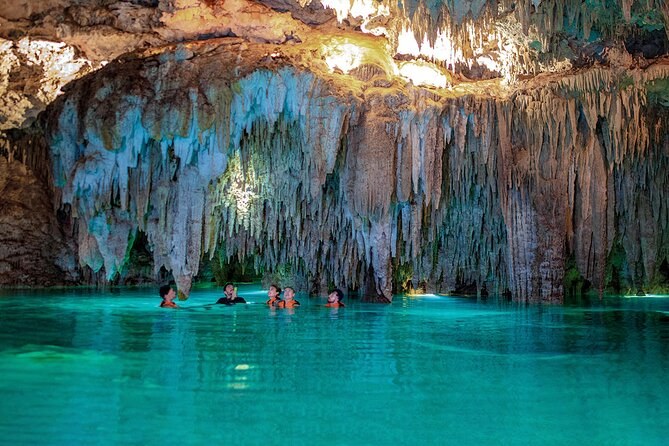
A sinkhole in limestone where the roof of a cave system has collapsed and exposed the fresh groundwater underneath. The Yucatán has thousands. They range from open pools that look like ponds to enclosed caverns with stalactites where you swim by torchlight.
They were sacred to the Maya and, on a peninsula with almost no surface rivers, they were also the water supply. Both facts are worth knowing before you get in one.
Which cenotes do these tours use?
The named ones on the departures compared here include Yax-Muul, Cenote el Sueño, Multum Ha, Taak Bi Ha and Cenote Nohoch. Open pools are easier for nervous swimmers; cave cenotes are the more memorable. Life jackets are provided on every departure that includes one.
Ruins first or swim first?
Ruins first, every time, and any operator who does it the other way round is getting the day wrong. The site is unshaded and gets hotter and busier through the morning; the cenote is comfortable at any hour. Doing the ruins at eight and the water at noon is the correct order and it is what the good departures do.
The half day: ruins and one cenote
Four to six hours, one swim, back for lunch. This is the right shape if you are staying in Tulum or Playa del Carmen, if you are travelling with young children, or if you want an afternoon left over. It is also the cheapest version.
The full day: ruins, cenote and turtles
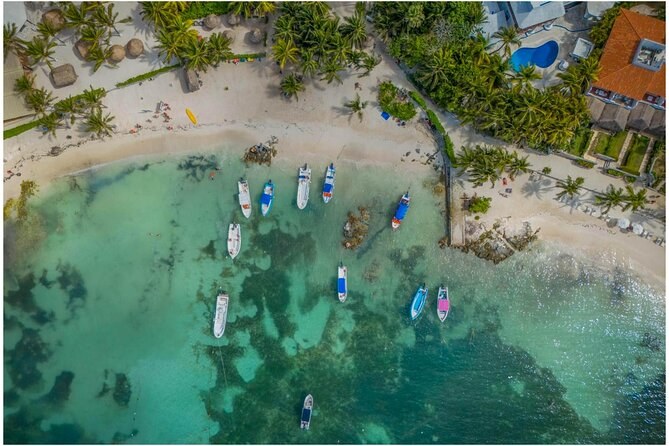
Seven to nine hours. Adds Akumal, a shallow bay where green turtles feed on seagrass and you snorkel over them with a guide. It is the most complete version of a Riviera Maya day and it is the one with the highest review counts.
Be honest about stamina. Nine hours with two swims and a walk round a ruin in August is a long day.
How the options compare
| Shape | Hours | Adds | Best for |
|---|---|---|---|
| Ruins only | 2–4 | Nothing | Cruise calls, tight mornings, ruins purists |
| Ruins + cenote | 4–6 | One swim | Families, half-day plans |
| Ruins + cenote + turtles | 7–9 | Akumal snorkel | A full Riviera Maya day |
| Ruins + Cóba + cenote | 8–10 | A second, climbable site | A second Maya site in the same day |
What to pack for both halves
You are dressing for two activities. Sun protection, a hat and shoes for uneven stone for the ruins; a swimsuit and a towel for the cenote. Reef-safe sunscreen if Akumal is on the itinerary, and expect to be asked to rinse before entering a cenote — ordinary sunscreen damages them and most sites enforce it.
How the turtle snorkel at Akumal works
Akumal Bay is shallow and sheltered, the turtles graze seagrass close in, and access is regulated: you go in with a guide, in a life jacket, within marked areas. Sightings are common year round but they are wild animals and nobody can promise them.
Timings from each town
| From | Pickup | Back | Realistic full-day length |
|---|---|---|---|
| Tulum | 7:30–8:30 am | 4–6 pm | 8–9 h |
| Playa del Carmen | 7–8 am | 5–6 pm | 9–10 h |
| Cancun | 6–7 am | 6–8 pm | 11–13 h |
The Cancun column is the one to look at twice. The pickup circuit alone can run to ninety minutes before you leave town.
Who should not book the full day
Anyone with a young child who naps, anyone who does not enjoy being in and out of the water, and anyone travelling in August who has not done a long day in that humidity before. The half day exists for exactly these cases and it is not a lesser version of the trip.
Cave cenotes against open cenotes
The word covers two quite different experiences and the listings rarely distinguish them. An open cenote is a pool under the sky, often with a shallow shelf, sometimes with a jump. A cave cenote is enclosed, lit by torch or by a single shaft of daylight, with stalactites reaching the water.
Cave cenotes are the more memorable and the more intimidating. If anyone in your party is uneasy in water or in enclosed spaces, check which kind a departure uses before booking — it is a bigger difference than the price between two otherwise similar tours.
Why the cenote is not an afterthought
It is easy to read the swim as padding sold to fill a day. It is not. The Yucatán has almost no surface rivers: rain drains straight through porous limestone into an enormous freshwater aquifer, and cenotes are the places where that aquifer is open to the sky. They were the peninsula's entire water supply, which is why Maya settlement patterns track them.
So a day that pairs a Maya port with a cenote is not two unrelated activities bolted together for value. It is the coastal half and the inland half of the same story about how people lived on limestone.
Booking the combination well
Three things to check before you pay. Whether the ruins come first — they should. Whether the gate fee is covered, because on a combination day it is easy for it to disappear into a longer inclusions list. And the group cap, which on these departures runs from ten to a stated hundred and matters most at the ruins, where a large group cannot hear a guide.
Lunch is the fourth, and the one people care about afterwards. A beachside meal and a buffet in a car park are both described as ‘lunch included’.
What these days do not include
A second archaeological site. If you want Tulum and Chichén Itzá in one day it is sold, and it is a fourteen-hour proposition with most of the middle spent driving. The combination days here pair the ruins with water, which is a far better shape for the same hours.
What time the combination days actually start
Earlier than the listing suggests, because the pickup precedes the departure time. A nine o'clock tour from Playa del Carmen usually means a collection between half past seven and eight; from Cancun it can mean half past six. Ask when you book, and plan breakfast around the answer rather than the headline time.
Booking a combination day that is not a compromise
The risk with any bundle is that everything in it is done briefly. Check three numbers before you book: how long you get at the ruins, how long at the cenote, and the total door-to-door. If the first is under ninety minutes on a nine-hour day, you are paying for transport rather than for a visit.
How many cenotes is too many
Some departures stack two or three. It sounds like value and it usually is not. Cenotes are individually memorable and collectively repetitive: after the second, most people are cold, their fingers have wrinkled and the third is a queue for a changing room. The exception is a genuinely varied pairing — one open pool and one cave — which does read as two different things.
One cenote and one other activity is the better shape, and it is the shape the best-reviewed departures take. If a listing advertises three cenotes and a ruin in nine hours, look at how long it gives you at each. The number that matters is not how many stops there are but how long you get at the one you actually came for, and on this coast that figure is often ninety minutes however many things are bolted around it.
What a good combination day feels like
The shape that works is a descending curve of effort. The hardest thing — walking a ruin in the sun — goes first, while everyone is fresh and the stone is cool. Then the water, which asks nothing of you. Then lunch. Then the drive home, which you can sleep through.
The shape that fails is the reverse: a cenote at ten, lunch at noon, and the ruins at two in the afternoon heat with a group that has already swum, eaten and stopped concentrating. A small number of departures genuinely run that way, usually because the ruins are the last stop on the way back north. If an itinerary lists Tulum third or fourth, that is worth noticing before you book.
Doing it in reverse from Tulum town
If you are already in Tulum, the best day is not a tour at all: gate at eight, ninety minutes at the ruins, back into town for breakfast, and a cenote in the afternoon at your own pace. You will see the same things, in better order, for less — the trade is that you organise it.
Frequently asked questions
Do all Tulum tours include a cenote?
Most do. A handful are ruins-only, which suits cruise calls and tight mornings.
Should we do the ruins or the cenote first?
Ruins first. The site is unshaded and gets hotter and busier through the morning; the cenote is comfortable at any hour.
Can non-swimmers do a cenote?
Yes. Life jackets are provided on every departure that includes one, and the open pools are shallow at the edges.
Will we see turtles at Akumal?
Usually. Green turtles feed in the bay year round, but they are wild and sightings are not guaranteed.
Read next: hours and what to bring · which month suits a full day. Every departure is compared on Tulum Ruins and cenote tour.
Ruins-and-cenote days compared
Tulum Guided Tour, Magical Cenote, Lagoon Snorkeling and Beachside Lunch
Max 16Lunch
From $119 per person
Pick your shape of day — compare Tulum Ruins and cenote tours.