Tulum Ruins vs Chichén Itzá: Which Should You Visit?
Short answer. Tulum for the setting, the sea and a short visit. Chichén Itzá for scale and for the single most famous building in the Maya world. Tulum is 90 minutes; Chichén Itzá is a full day from anywhere on this coast.
Worth knowing before you book anything: several of the tours sold from Tulum go to Chichén Itzá and never enter the Tulum archaeological zone at all. If you wanted the ruins on the cliff, read the itinerary rather than the title.
The short answer
If you have one morning and you are staying on this coast, Tulum. If you have a whole day and you want the building everyone has seen photographs of, Chichén Itzá. They are not substitutes for one another and doing both is entirely reasonable on a week's holiday.
Side by side
| Tulum | Chichén Itzá | |
|---|---|---|
| Drive from the Riviera Maya | 0–1 hour | 2–3 hours each way |
| Time on site | 90 min – 2 h | 2–3 h |
| Whole day? | Half day at most | Yes, 10–12 hours |
| Setting | Cliff above the Caribbean | Inland, flat, open |
| Scale | Small | Monumental |
| Shade | Almost none | Some, in the approach |
| Climbing | Not permitted | Not permitted |
| Crowds | Heavy 10 am – 2 pm | Heavy most of the day |
| Gate cost 2026 | roughly MX$515–622 (about US$28–35) | Higher; INAH plus a state charge |
The case for Tulum
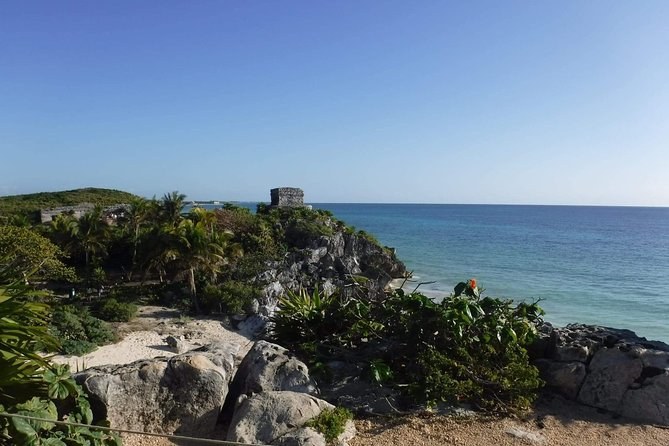
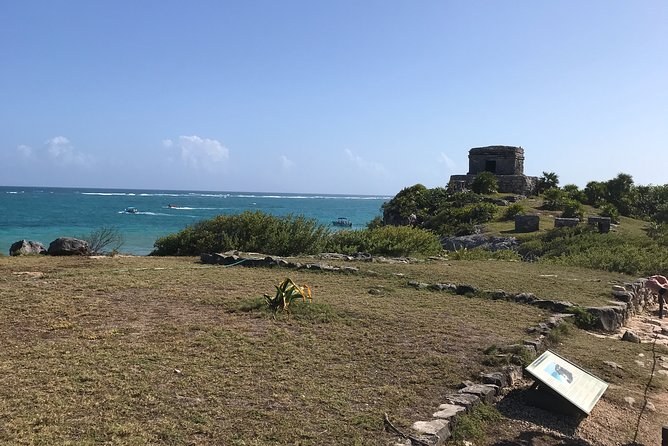
Nowhere else did the Maya build on a cliff above that colour of water. It is also the easier day by a distance: an hour's drive at most from anywhere on the Riviera Maya, ninety minutes on site, and back for lunch. And it is the site that tells you about the Maya economy rather than about Maya monumental ambition — a working port, still occupied when Europeans arrived. That argument is on why Tulum matters.
There is a second argument that visitors rarely hear before they go. Tulum is the site where preservation of surface detail is best: painted stucco, relief carving, the figure over the doorway. At the larger inland cities you are looking at structure and scale, because the finish has gone. Here you can still see a little of what a Maya building actually looked like when it was in use, and that is a different kind of visit from being impressed by a big pyramid.
The counter-argument is honest too. If you have seen photographs of Tulum and are expecting something monumental, you will have absorbed the whole site in an hour and may wonder what the fuss was about. Tulum rewards knowing what you are looking at more than almost any site on this coast.
The case for Chichén Itzá
Scale, and a single building that has no equal in the region. It is a much larger, more architecturally ambitious site, and if you are only going to see one Maya city in your life it is the more complete statement of what they could build. The cost is the day: two and a half hours each way from Tulum, and most of the coach tours add a shopping stop that reviewers are consistently annoyed by.
It is also a genuinely different experience of crowding. Tulum's crowd is concentrated into a small walled area, so it feels busier than it is; Chichén Itzá is large enough to absorb its visitors but has a dense band of souvenir sellers along most of the main paths, which some people find wearing and others barely notice. Neither is quiet. Both are much better before ten in the morning.
Check the itinerary, not the title. Some tours sold under Tulum's name spend the day at Chichén Itzá instead. Compare Tulum Ruins tours to see what each one actually visits.
What each day actually looks like
A Tulum morning: leave at seven or eight, an hour or two on the road, ninety minutes on site, and you are back for lunch with the afternoon free. Most departures then add a cenote, which turns it into a comfortable six or seven hours.
A Chichén Itzá day: pickup between six and seven, two and a half hours out, two to three hours on site in full sun, a cenote and a buffet lunch, usually a stop in Valladolid, and back between six and eight in the evening. It is ten to twelve hours, most of it enjoyable, some of it in a van.
The shopping-stop problem
Worth knowing before you book a budget Chichén Itzá coach. Several of the cheaper day trips build in a retail stop that is not in the advertised itinerary, and reviewers on those listings are consistently annoyed about it — one describes losing nearly two hours to a stop that was never mentioned, while Valladolid, which was in the itinerary, got thirty minutes.
The small-group departures generally do not do this, and they cost more for exactly that reason. If a twelve-hour day trip is unusually cheap, the retail stop is often the explanation.
Cost, honestly compared
Tulum is the cheaper day in every respect: a shorter drive, a lower gate charge, and departures from US$67. Chichén Itzá carries a higher combined entrance charge, because the state of Yucatán levies its own fee on top of the INAH ticket, and the day trips start higher because the coach is on the road for twelve hours.
If budget is the deciding factor and you are already on this coast, Tulum wins it without much argument.
And Cóba, the third option
Worth knowing about because it answers a question neither of the others does: it is the one you can still climb. Forty-five minutes inland from Tulum, in jungle, dispersed enough that you cycle between groups of buildings. Several departures pair it with Tulum in a day, which works well.
Doing both
Tulum first, on a separate morning, and Chichén Itzá as its own full day. Trying to combine them makes for a fourteen-hour day with two hours of walking in it. If your time is genuinely limited, pick one properly rather than seeing two badly.
Verdict by traveller
- One morning on the coast: Tulum.
- A full free day and it is your only Maya site: Chichén Itzá.
- Travelling with children: Tulum, then a cenote.
- You want to climb something: Cóba.
- A week on the Riviera Maya: all three, on separate days.
Whichever you choose, check what the itinerary actually visits — the Tulum Ruins tour from Cancun options in particular vary more than their titles suggest.
Frequently asked questions
Can you visit Tulum and Chichén Itzá in one day?
It is sold, and it makes a fourteen-hour day with a great deal of driving. Doing them on separate days is a far better visit to both.
Which is better for a first Maya site?
Chichén Itzá for scale, Tulum for setting and for a short, easy day. If you are already on the Riviera Maya coast, Tulum is much the simpler outing.
Tours to each of the three sites
Decided which one? Compare Tulum Ruins tours and check what each itinerary actually visits.